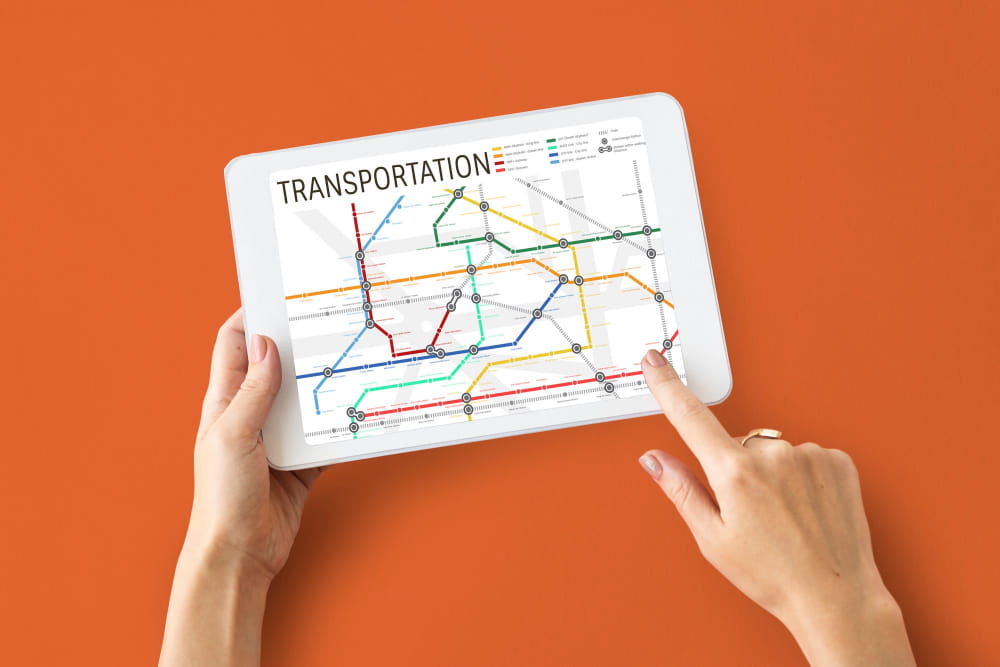

The trucking GPS apps are GPS software applications that are customized to the needs of commercial vehicle drivers and owner operators and include features for fleet teams. Different from typical map applications, they take truck-specific information into account when creating safer, more practical routes, including vehicle height, weight, length, axle count, bridge limits, hazardous material restrictions, low clearances and commercial road rules. Simply put, a trucking GPS application makes it easier for truck drivers to steer clear of roads that do not allow for big vehicles while also helping them to plan their routes, stay safe, and deliver goods more efficiently.
This is a huge difference to today’s drivers. A normal road navigation system can help to locate a truck for a direct low bridge or narrow residential street. A trucker navigation app is designed to mitigate those risks by implementing commercial routing logic as opposed to passenger-car routing logic. This makes trucking GPS apps a practical necessity for local, regional, and long haul operations.
How Trucking GPS Apps Work for Commercial Drivers
A trucking GPS application is built by integrating basic navigation with route intelligence for trucks. Typically, the driver will input the following information:
- Truck height
- Gross vehicle weight
- Trailer length
- Width
- Load type
- Hazmat status
The app then finds a route that better suits the vehicle after having the above information. This can prevent drivers from having to make sharp turns, go on weight-restricted roads, drive uphill or downhill, drive through seasonal closures, or drive under low overpasses. Some applications will also offer real-time traffic information, gas stations, weigh stations, truck parking and weather warnings.
This is the difference between a typical navigation app for a consumer and a trucker’s map application. The route isn’t all about the fastest path. It is the most secure and legal route for a commercial vehicle.
Why Are Trucking GPS Apps Useful?
They simply help minimize routing errors, enhance efficiency and aid in better driving decisions.
Let’s take a look at the top benefits of trucking GPS applications:
Safer Route Planning
Lower risk of encountering roads that are not suitable for large commercial vehicles with truck-safe routing. This minimises the potential for accidents, delay and costly rerouting.
Better Compliance
Commercial drivers are subject to more rules than regular drivers. A top-notch trucker navigation app keeps drivers on track with the truck routes, road restrictions and load based restrictions.
Time and Fuel Savings
Typically, a substandard route can cost hours of time and extra fuel. A dedicated app helps drivers steer clear of dead ends, backups and traffic jams that are causing inefficiencies by taking avoidable detours.
Reduced Driver Stress
It can be tough to drive a big rig down an unfamiliar road. A driver who is more confident about the route will have a smoother and less stressful journey.
Improved Trip Planning
In addition to providing turn-by-turn directions, many drivers rely on these apps to help them plan their trips, manage their rest stops, and sequence stops. This is particularly advantageous for longer trips involving numerous drop-off locations.
Truxup understands the increasing significance of digital tools tailored for trucks in their everyday driving and carrying routines.
Key Features to Look for in the Best GPS Truck App
Not all apps have the same level of routing intelligence. When selecting a GPS truck app, it’s crucial to prioritize those features that are directly applicable to commercial driving.
Truck-Specific Route Customization
The app should be able to accept the dimensions of the truck and load information. This is the base for it to be able to work as a real truck GPS solution.
Real-Time Traffic and Road Alerts
Deliveries are impacted by traffic congestion, accidents, weather status or temporary closures. Reliable alerts help drivers make quicker and smarter decisions.
Offline Navigation
There are many areas of weak mobile service along many trucking routes. The offline maps are useful when the Internet connection is lost.
Truck Stops and Parking Information
One of the greatest challenges is locating safe truck parking. It should also assist in locating parking lots, gas stations, rest stops and service stations on the way.
Weigh Stations and Compliance Support
There are some apps that will provide alerts for weigh stations, estimates of tolls and notices about route conditions related to commercial driving.
Easy Interface
There’s a lot that goes into making a great app, but it must be easy to use while you’re still sitting in your vehicle, easy to read at a glance and quick to adjust when routes change unexpectedly.
They’re important when choosing from the top free trucker GPS apps, as well as when evaluating between premium GPS apps and advanced fleet solutions.
Best Free Trucker GPS App vs Paid Options
There is a very common question that the driver asks and that is whether it is sufficient enough to have a free option. It depends on the frequency of use, the type of loads being handled and the level of detail required for the routing.
Free Options
A good free GPS software for truckers may be helpful for new truckdrivers, short regional journeys, or in case of a GPS malfunction. Basic truck-safe routing, traffic alerts and limited trip planning are provided by some free apps. They’re more than usually accessible for drivers looking for important help without a subscription.
However, free tools may have limitations such as:
There are fewer customization options for the routes.
- Fewer route customization settings
- Limited offline access
- Fewer updates
- Ads or upsell prompts
- Less detailed truck stop and parking data
Paid Options
Best Paid Trucker GPS Apps typically provide more sophisticated routing intelligence, more accurate maps, better support and more operational tools. Serious owner operators and fleets may prefer premium apps because if one of their routing mistakes was avoided, it’s worth their while.
Having paid tools can be a more practical investment for routes that push the load size limits or require heavy interstate mileage, or when hazards come into play.
What Makes the Best Paid Trucker GPS Apps Worth It?
The key to the greatest advantage of paid apps is the accuracy. Route mistakes in trucking can be costly, in terms of fuel costs, time, loss of customer confidence, and safety. Premium apps will frequently include:
More Accurate Commercial Routing
In general, paid tools provide better truck restriction databases and updates.
Advanced Planning Tools
Dispatch and delivery tasks are more efficient thanks to features like route optimization, multi-stop planning, toll estimates, ETA management, and fuel stop planning.
Better Support for Complex Loads
For special freight, the app can provide more complex routing strategies for legal and safe movement.
Integration Potential
Others are integrated with fleet software, ELD devices or dispatch processes and are more useful than just navigation.
That’s when the difference becomes apparent between a simple map application for truck drivers and a complete navigation system.
Is an Android GPS for Truck Good Enough?
Yes, there are many times when an android GPS for truck is very effective. Android-based truck navigation apps are available for a wide variety of devices and many truckers choose to use them over dedicated GPS systems because of their flexibility, screen size and hardware costs.
A smartphone-based solution is suitable when:
- The phone or tablet has a stable mount
- The screen is sufficiently large for readability.
- Offline maps are downloaded
- A true truck route customization is possible with the app.
Still, hardware matters. The navigation performance may be affected if the device overheats, drains the battery rapidly or struggles with signal strength. If you’re a high mileage user, the reliability of the vehicle is a key factor.
When a Standard Map App Becomes a Risk
A lot of drivers are still using traditional navigation systems. This could be a good idea if it’s your personal car, but it can lead to some major issues when it comes to trucking. These standard apps are not always accurate when it comes to commercial restrictions, and a single poor turn can result in delays, damage to property or to the safety of the people.
This is particularly vital if a route has been confused with by dates on the system or old navigation references. Many terms from older navigation systems and routing systems will still be found in discussions today such as GPS Rollover, which has reminded the industry of the importance of having accurate and current GPS data.
This is the reason why the pros are increasingly opting for equipment created specifically for trucking rather than using an app that’s been modified to work in a truck.
How to Choose the Right Trucker Navigation App for Daily Use
Weighing the route type, budget and operating requirements, the ideal app is dependent on the driver. A local driver can make only local considerations and cease to plan. Low clearance alerts, truck parking visibility and full offline support might be required for a long-haul owner-operator. Consistency and compliance with routes may be more important for a fleet.
It is useful to ask yourself the following question before selecting:
- Does the app cater to truck dimensions and load restrictions?
- Are map data regularly changed?
- Does it require an Internet connection to operate?
- Can it provide information on available truck parking and fuel stops?
- Is it easy to use during real driving conditions?
Commercial transportation is increasingly data-driven, and navigation tool is no longer an optional item anymore. They are a component of safer planning, better compliance and delivery performance. Truxup represents a larger industry movement towards smarter navigation technology for trucks, for business and drivers seeking to optimize their routing decisions.